

Something that often comes up at journalist meet-ups is how press freedom is deteriorating, with Italy falling from 49th to 56th place in an index that ranks media health in 180 countries. I wonder though if people outside of this bubble are as concerned about what this means for our democracy — which, as discussed before, is very much under pressure. Putting aside growing public distrust in the media and whether this is justified or not, it’s undeniable that the quality and reach of information is under assault from many fronts, as recent events show.
In October 2025, prominent investigative journalist Sigfrido Ranucci of the Rai programme Report was targeted in a car bombing that, fortunately, left him unscathed (it seems the Camorra was involved). This was just one of 118 attacks, 15 of which violent, against journalists in Italy last year. Another shocking case was that of government surveillance of Francesco Cancellato and Ciro Pellegrino of online media Fanpage. And in April this year, Roberto Saviano was acquitted of criminal defamation, a charge brought by transport minister Matteo Salvini for comments the author had made about the politician’s anti-immigrant, xenophobic stances.
When the law fires back
Saviano’s acquittal is certainly good news, but the fundamental issue is that the case was brought against him in the first place, and by one of the country’s most influential political operators. SLAPPs — a rather onomatopoeic acronym for “Strategic Litigation Against Public Participation” — are lawsuits or legal threats used to silence and intimidate journalists, campaigners, whistleblowers, intellectuals, so on and so forth. Given the often dubious nature of these claims, those lodging them don’t necessarily expect to win in court but use SLAPPs as a way to prevent or delay action or the publishing of uncomfortable information, or to “punish” those speaking truth of power.
In Italy, politicians — especially those in the current government, PM Giorgia Meloni included — as well as other public figures and corporations have a certain penchant for using SLAPPs to stifle opposition by appealing to the country’s libel laws, which are some of the strictest in Europe. Since 2023, Italy has consistently topped European rankings for the highest number of such abusive legal actions. And while an EU directive obliged member states to strengthen anti-SLAPP protections by early May, Italy has taken a minimal interpretation of the law and missed the deadline for introducing reforms — which will cover only cross-border civil cases, even though 90% of SLAPPs are domestic.
Eva Pastorelli, a researcher and campaigner at the Rome-based environmental justice NGO ReCommon, has been a direct target of such tactics at the hands of Eni, Italy’s part state-owned oil and gas major and one of its most powerful companies. I spoke to her about how the fire-breathing six-legged dog (see Eni’s logo) has dealt with public criticism.

Six-legged dog vs. climate justice
“We clearly feel targeted by Eni’s repeated legal harassment”, says Eva. SLAPPs’ primary aim is to silence and intimidate dissent, but “the secondary, more tangible effect is to divert an organisation’s time and financial resources … Time spent defending ourselves from Eni’s allegations is time taken away from our campaign work”.
On an individual level, being the subject of these accusations “is naturally concerning”. “After all, we’re talking about one of the world’s largest fossil fuel corporations, with vast resources and the ability to sustain legal proceedings for years on end. Over time we have, however, developed internal tools to identify and manage moments of personal difficulty”.

Eva’s organisation has been in Eni’s crosshairs since 2021. After an unsuccessful attempt to stop a Report interview with ReCommon’s Antonio Tricarico from being aired, Eni took legal action to stop the NGO from using terms such as “climate crimes” in relation to the company. This was in response to ReCommon, together with Greenpeace and 12 Italian citizens, suing Eni for its contribution to global heating in a proceeding known as Giusta Causa (“Just Cause”) — the first of its kind in Italy. The case hit a milestone last July when Italy’s highest tribunal “clearly and definitively ruled that the country’s courts have jurisdiction over climate-related claims for damages, including against private companies”, Eva comments.
“This victory goes well beyond the Just Cause and opens up numerous new opportunities for climate litigation in our country”.
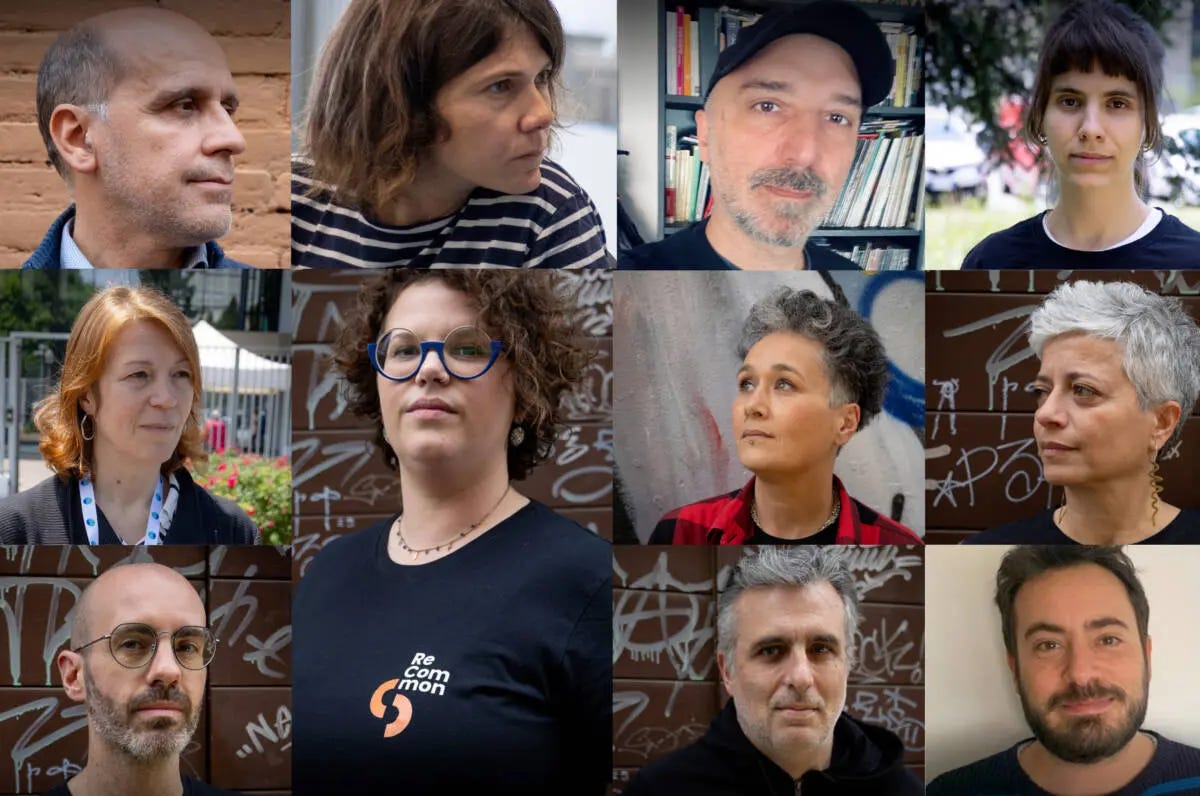
In 2024 and 2025, Eni brought civil and criminal complaints against Tricarico for other interviews he gave to Report and these were ultimately resolved through a mediation process that resulted in the company retracting its claims and request for damages. But just as the ink was drying on the agreement, the fossil fuel giant hit ReCommon with another SLAPP. (Note that the company denies this characterisation.)
In March this year, Eni initiated a compulsory civil mediation with ReCommon — a legal proceeding that takes place outside of court and is a precondition for civil lawsuits in Italy — accusing the NGO of aggravated libel and claiming damages worth 800,000 euro. The dispute revolves around statements Eva made to Report regarding Eni’s business dealings with Israel:
“Eni has two partnerships with Israeli companies or institutions: the first with the Israeli Ministry of Energy, which on October 29, 2023, awarded exploration licenses off the coast of Gaza to two consortia of national energy companies. Eni established its second partnership with an Israeli company named Delek Group, which was blacklisted by the United Nations because it operates in the Occupied Palestinian Territories and does so illegally.” (Eva Pastorelli’s Report interview, 14 December 2025)
Eni described Eva’s statements as “defamatory” for sparking feelings of hatred and hostility towards the company, potentially putting its employees at risk. But Eva merely stated the facts based on publicly available information at the time of her interview. In 2023, the Israeli energy ministry announced its assignment of gas exploration licences off of Gaza, including to Eni, as also reported by Reuters. And in the days after the Report episode, ReCommon published Eni’s reply to the interview, which stated that “Eni does not plan to be involved in activities in the area in the future”. But it was not until March this year — months after the TV segment — that the company confirmed media reports that it had withdrawn from the Gaza project, a decision taken in October 2025.
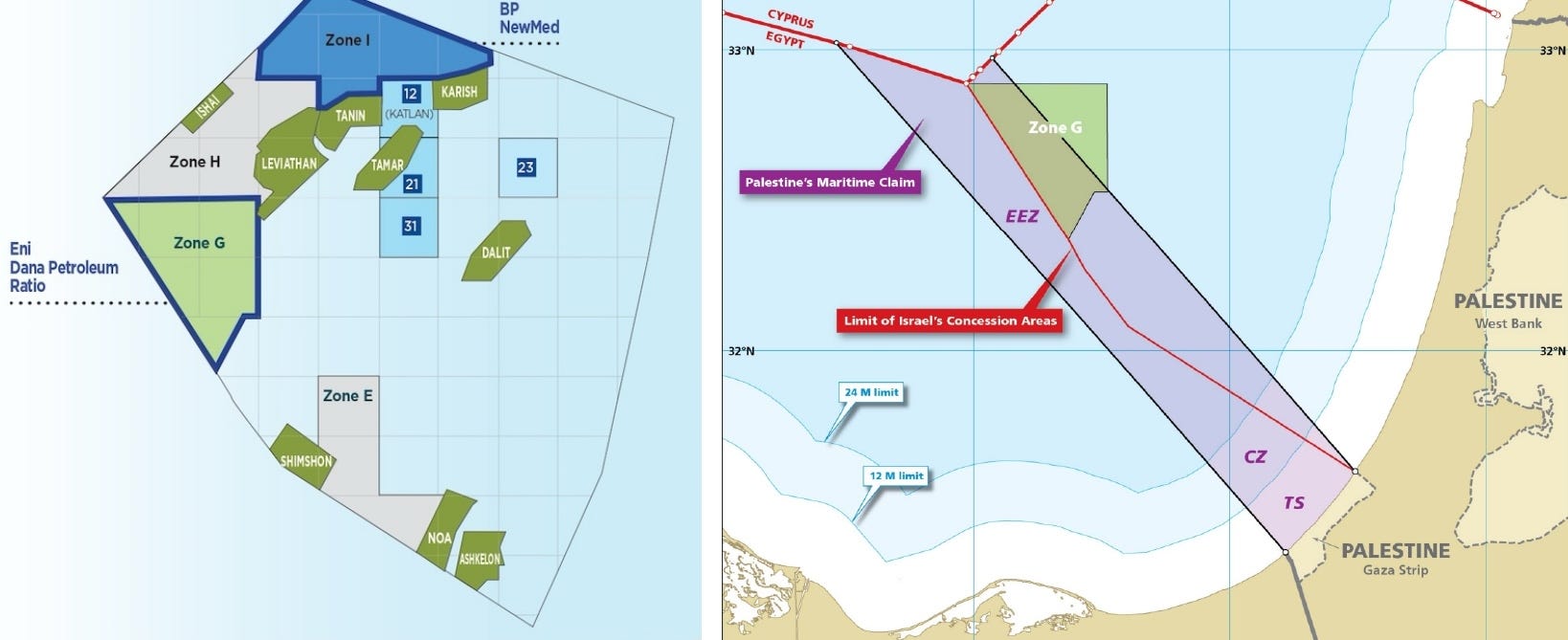
Eni also disputes Eva’s use of the term “blacklisted” to describe Delek Group, which the six-legged dog has dealings with in its UK North Sea operations. Delek is an Israeli conglomerate that appears in the UN’s database — often described as a “blacklist” — of companies doing business in illegal Israeli settlements in the West Bank.
Eva states that “we’re not the only ones who have reported these links, including internationally (see, for example, Francesca Albanese’s letter to Eni from December 2025) … but Eni does seem to be particularly interested in us, to the point of hitting us with a legal warning every two months.”
“Eni’s strategy appears designed to call for compulsory mediations … that aim to reach an agreement, namely a correction or public clarification of statements, or even the removal of content, with the ultimate goal of stopping public discussion of a topic or case that is particularly sensitive for Eni”. Eva thinks it unlikely that the conglomerate will want to move the now-concluded mediation forward by taking her and ReCommon to court because all this would do is bring more attention to the issue. “But it’s a Sword of Damocles because they have five years now to sue us”.
Eni issued yet another legal warning for a post that ReCommon published on 28 April in collaboration with other civil society groups that denounced how one of the company’s subsidiaries was sponsoring the May Day concert in Rome:
Eni’s tactics “can be seen as continued attempts to delegitimise ReCommon in the eyes of public opinion and, consequently, in those of the presiding judge in the Just Cause”. About the latter case, Eva says: “The Rome judge rejected our request for technical consultants and witnesses to be heard, moving towards final arguments at the hearing scheduled for early 2027”, with a ruling expected next spring. “This is not the evidentiary phase we had hoped for, but along the way we’ve certainly established an extraordinary precedent”, she adds, referring to the July high court ruling.
Eva and ReCommon’s story is big and small all at once. Big because it takes a lot of guts and conviction to stand up to a corporate giant, especially one whose back is covered by the state. And small because it’s a drop in an ocean of covert aggressions that are distorting the function of the law to protect the weak from the powerful when seeking justice. Let’s just hope that the mutant dog decides to stop fanning the flames.
If you want to support ReCommon’s work or legal fees, please consider donating to the organisation.
In Italy, most days feels like a tuffo — a “dive” — into chaos.
I’m Mara Budgen, a freelance journalist based in Milan, where I returned in 2025 after a five-year stint in Tokyo. (Don’t be fooled by my (British) surname: I’m as italiana as love for carbs and disorderly queueing.) In this Substack, published every other week, I dive into the latest news and stories to go under the surface of what’s happening in Italy. No stereotypes about la dolce vita, but an honest look at the currents and events shaping this peninsula that I and 60 million other people call home.