

If you’re an early subscriber, thank you. And if you already know what this newsletter is about, I suggest you skip this next bit.
In Italy, most days feels like a tuffo — a “dive” — into chaos. This newsletter is an anchor to make sense of this country and its place in the world, and of the tide of news, analysis, opinions that is constantly washing up on the shores of our attention.
How to pronounce tuffo :
I’m Mara Budgen, a journalist based in Milan, where I returned in 2025 after a five-year stint in Tokyo. (Don’t be fooled by my (British) surname: I’m as italiana as love for carbs and disorderly queueing.) In this Substack, published every other week, I dive into the latest news and stories to go under the surface of what’s happening in Italy. No stereotypes about la dolce vita, but an honest look at the currents and events shaping this peninsula that I and 60 million other people call home.
News salad
After the last newsletter’s monster dive into the judicial reform referendum, I would’ve rather steered clear of politics this time. But then I got caught up in the post-referendum whirlpool (put succinctly, the “no” vote won and several heads rolled), Italian MEP Ilaria Salis was questioned by police before attending the “No Kings” march in Rome, and — the final straw — a report came out that put the erosion of the rule of law in Italy on a par with Hungary. So politics, in particular the government’s quashing of the space for dissent, is very much at the centre this week.
Also, I finally got round to reading Francesca Albanese’s book, “When the World Sleeps”, which, as well as dissecting the multigenerational onslaught against Palestinian bodies, culture and identity, provides a first-hand account of what the suppression of dissenting voices looks and feels like today. But first, every informational diet should begin with a healthy news salad.
〜 Italy refused a request for US military aircraft to land at Sigonella base in Sicily before heading to the Middle East. The reason given by Defence Minister Crosetto was that Washington hadn’t sought prior authorisation.
〜 Newspapers Repubblica and La Stampa were sold to the Greek group Antenna together with the rest of the GEDI media conglomerate formerly controlled by the Agnelli-Elkann family, of Fiat fame, prompting concerns over editorial independence.
〜 Italy’s coal plants will stay online until 2038, 13 year later than planned. The move, prompted by the Middle East energy crisis, seems especially myopic because, let’s be honest, dependence on fossil fuels is what caused this mess in the first place.
〜 The competition authority is investigating beauty brands including Sephora for targeting products at minors. Among the marketing practices under scrutiny are attempts to sell skincare, such as anti-ageing treatments, to under-10-year-olds.
〜 A census of homelessness in Italy was carried out for the first time. This affects 10,000 people in 14 cities while only 6,700 spots are available in nationwide homeless shelters, where foreign males are the most represented group.
〜 A cable car in Cortina that was supposed to open in time for the Olympics it still being built. Furthermore, an investigation has been opened into whether its construction, costing 35 million euros, caused a landslide in September.
If you think these or any other topics warrant a deeper dive, let me know –
Melons vs. bad apples
The government says it’s taking back control from the judiciary and left-wing insurrectionist groups to restore safety and protect freedoms. But many aren’t buying this narrative, as seen most clearly in the wholesale rejection of the proposed justice reforms. With a turnout of almost 60% — double compared to the last referendum — 14.5 million people (53%) cast their ballots against the constitutional revisions, with younger voters — i.e., 60% of 18- to 34-year-olds — the driving force behind this result.
The fallout for the government has reverberated far and wide, adding to other woes such as the poor state of the economy and cost-of-living impacts of the Middle East war. In the vote’s aftermath, a reportedly fuming PM Meloni forced the resignation of key government figures, even a minister — not of justice, as one might expect, but Tourism Minister Santanchè. Tourism? Well, Santanchè’s legal issues, which hadn’t put Meloni off thus far, all of a sudden became too unseemly for a senior representative. Meloni wants it to look like she’s getting rid of the bad apples in her team… the same ones she didn’t mind rotting in her fruit bowl just days before the referendum. But someone called “Melons” should know her produce well ;-)
The opposition is instead making the laughable claim that the vote shows they could win the next election, even though no one even knows what the opposition parties are for and who the alternative to Meloni would be. (This 22-year-old student in Rome quoted by The Guardian described Elly Schlein, leader of the main centre-left party, well: “A bit like Meloni, she’s part of the shouty politics — all slogans and no solutions, as if they’re speaking at a fish market.”)
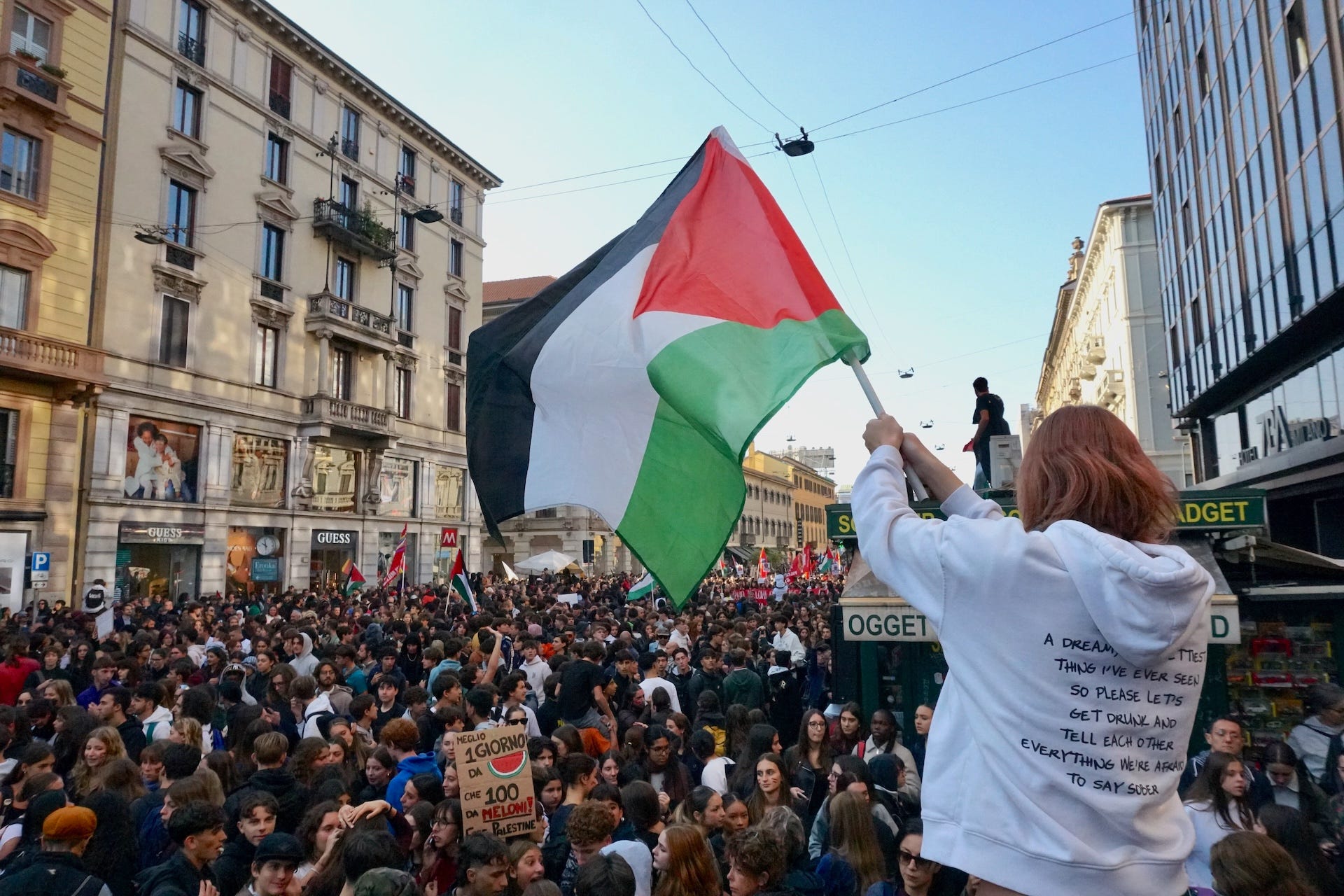
I draw a direct line between high voter turnout in the referendum, especially amongst the young, with the growing mobilisation of civil society that we’ve seen in recent years, particularly around the genocide in Gaza. Not since the climate change protests of 2019 have so many people taken to the streets. (As a side note, I went back to see my coverage of the Fridays for Future marches in Milan and Extinction Rebellion occupation of central London, a reminder of how much we’ve lost a sense of momentum around climate action.) Broad church protests like that of 22 September, when hundreds of thousands of people marched during a 24-hour general strike in solidarity with Gaza, have broken up into a kaleidoscope of smaller demonstrations, but political activation is definitely back on the menu these days.
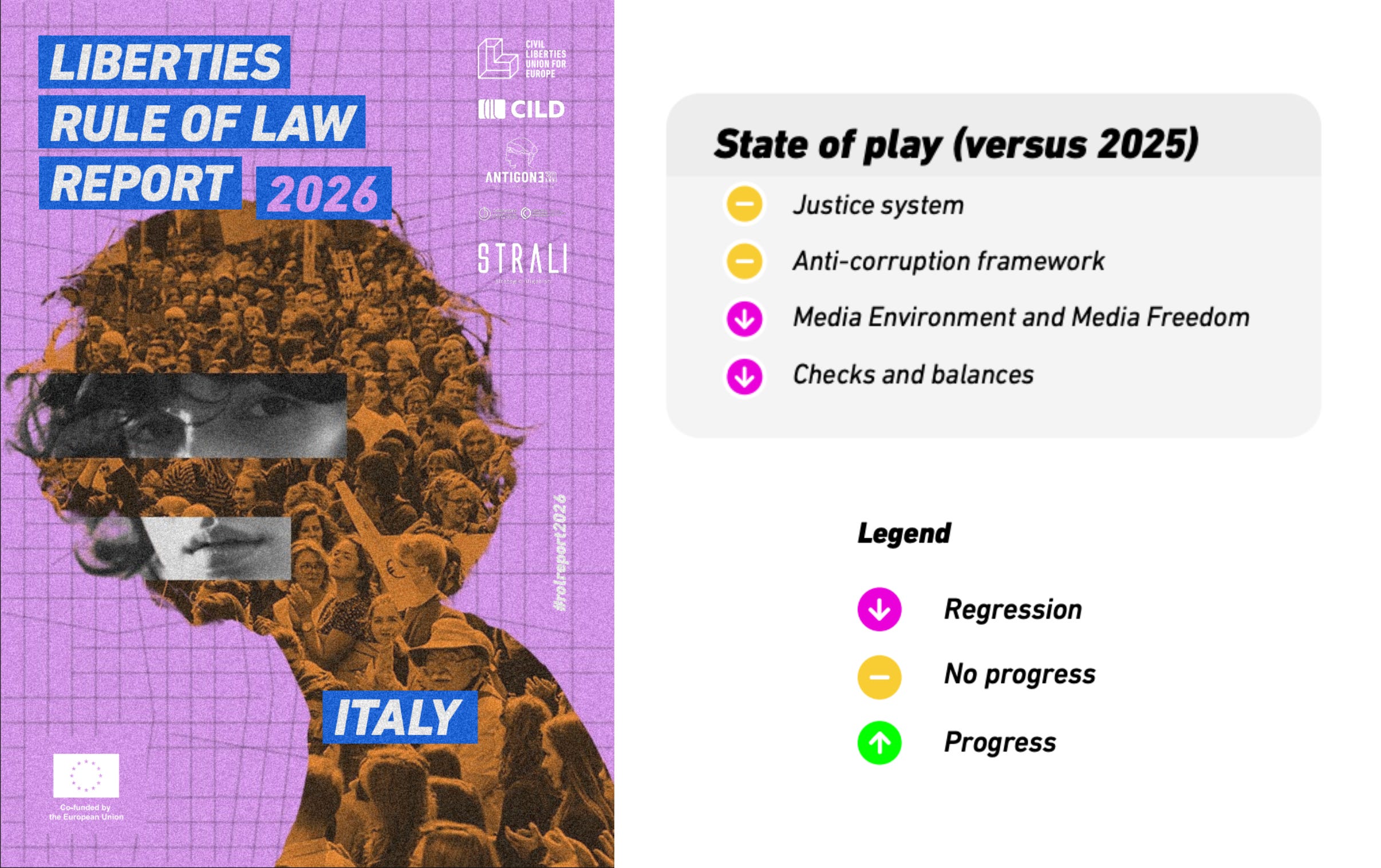
Yet, an opposite force is at work: a tightening of civic space. According to the Civil Liberties Union for Europe’s assessment, which came out this week and was first reported by The Guardian, Italy is in the company of Bulgaria, Croatia, Hungary and Slovakia as one of five EU states “consistently and intentionally” dismantling the rule of law. Not the best club to be in.
“A day with Fridays for Future” follows a climate activist nicknamed the “Italian Greta Thunberg” on the day of a climate march:
“No progress has been recorded both in the justice system and in the anti-corruption framework, while severe regression has been pointed out in the field of media and press freedom and democratic checks and balances” (Liberties Rule of Law Report 2026 - Italy)
The report paints a detailed picture of the erosion of civil liberties in Italy. Particular attention is paid to the Security Decree, which “introduced new crimes affecting activists, minorities, and opponents, undermining civic participation on various fronts”. The targets aren’t just Antifa and pro-Pal groups, but the same protesters who were striking for the climate in 2019, as the decree “further criminalises forms of peaceful demonstrations, such as road blockades by eco-activists”.
Attacks on press freedom and freedom of expression are another concerning part of the equation, including “the use of spyware against activists and journalists” — most notably in the case of Francesco Cancellato — and, I’m adding here, the systematic use of SLAPPs (strategic lawsuits against public participation), with Italy on the European podium for the highest number of such abusive legal actions.
In addition, “migration policies have become more and more restrictive”, with one of the grim results being that “deaths in the Mediterranean increased”. Such measures have been “continuously challenged by the judiciary, against which government officials started launching smear attacks, threatening its independence and authority” — with any reference to the Right’s demonisation of magistrates in the referendum campaign anything but coincidental.
A recent episode has brought such illiberal tendencies to the fore once more. Last weekend, a large “No Kings” demonstration was held in Rome against Trump, the US-Israeli war on Iran and the Meloni government, with 300,000 people taking part, say organisers, or 25,000 according to police. That morning at 7 a.m., police visited the hotel room of Ilaria Salis, the European Parliament member for Italy who spent 15 months in a Hungarian jail accused of attacking neo-Nazi demonstrators in Budapest in 2023 — a charge she categorically denies. Her trial was suspended over two years ago when she was elected MEP, gaining parliamentary immunity.
Salis says her questioning last weekend showed the Security Decree’s preventative detention clause, which allows police to take into custody demonstrators deemed potentially dangerous before marches, in action. The police denies this, claiming that it was obligated to act because Salis had been flagged by Germany through the Schengen Information System, a database of persons of interest shared across Schengen countries (that Il Post has a good explainer on). Apparently, Salis is one of the people named in a German trial against far-left group Antifa Ost, a.k.a. the “Hammer Gang”, for alleged attacks on far-right groups.
In Italy, the episode has opened up a Pandora’s Box of half-truths and unknowns, and renewed right-wing attacks against the MEP. Pagella Politica analysed the possible scenarios, concluding that the most likely is that, while Salis’ telling is hard to verify, the police’s version is full of holes. For example, “if it is true, as Salis has referred, that she was asked about her involvement in the (No Kings) march… the dynamic of the police check recalls the preventative logic similar to that of the recent ‘Security’ decree.”

Hopefully the truth about Salis’ questioning will come out soon. With each draconian decree, silenced voice and rights violation met with impunity, we’re turning the ratchet back on democracy — and being lied to in the process. And if civil movements ultimately fail to effect change, overcoming the high barricades being erected by the government, the “best” case scenario is that people grow even more disaffected with politics, and the worst case is that the violence bubbling under the surface boils over.